Industrial investing in Myrtle Beach rewards operators with local market knowledge and tenant relationships more than it rewards institutional capital seeking large-scale logistics deployment, because the market's inventory skews toward smaller functional warehouse and flex product that trades below institutional deal-size thresholds. The most liquid industrial submarkets are along US-501 near the Conway municipal airport, along the Horry County industrial park corridors near Loris, and in the light industrial flex parks serving the construction and building supply trade that is booming alongside the residential market. Cap rates for stabilized multi-tenant industrial and flex range from 6.50% to 7.50% depending on age, clear height, and dock configuration, and the absence of institutional competition means private buyers with regional bank financing can acquire at yields that compensate adequately for the limited exit buyer pool.
Industrial Market Overview: Myrtle Beach 2026
The Myrtle Beach industrial market in 2026 reflects the metro's broader economic momentum, driven by tourism and hospitality, healthcare, retail trade, construction, education. Key metrics for industrial investors:
- Industrial Vacancy: 7.2%
- Industrial Cap Rates: 6.25%-7.25%
- Metro Rent Growth: 4.1% year-over-year
- Job Growth: 2.9%
- Population Growth: 2.8%
- Median Asking Rent: $1,385
Industrial Subtypes in Myrtle Beach
The Myrtle Beach industrial market encompasses a range of property subtypes, each with distinct risk-return profiles and financing requirements:
- Distribution & Logistics Centers
- Cold Storage & Food Processing
- Manufacturing & Production
- Flex / R&D Space
- Truck Terminals & Cross-Dock
- Data Centers
- Self-Storage
- Industrial Showrooms
Each subtype has different lender appetite, underwriting criteria, and optimal financing structures. Understanding which subtypes perform best in Myrtle Beach's specific market conditions is critical for investment success.
Key Investment Metrics
Industrial investors evaluating Myrtle Beach should focus on these key performance indicators:
- Cap Rate Spread: Myrtle Beach industrial cap rates at 6.25%-7.25% compare favorably to national averages, reflecting attractive yields for investors seeking current cash flow
- Rent Growth Trajectory: 4.1% annual rent growth supports both value-add and core investment strategies
- Supply Pipeline: New industrial construction activity should be evaluated relative to the market's absorption capacity
- Tenant Quality: The Myrtle Beach metro's major employment sectors (tourism and hospitality, healthcare, retail trade, construction, education) drive industrial tenant demand and creditworthiness
Financing Options for Industrial in Myrtle Beach
Industrial properties in Myrtle Beach can be financed through multiple capital sources, each with distinct advantages:
- Bank Permanent Loans
- Life Insurance Company Loans
- CMBS
- Bridge Loans
- Construction Loans
- SBA 504 (Owner-Occupied)
The optimal financing structure depends on your business plan (core hold, value-add, or development), the property's current condition and occupancy, and your desired leverage and hold period. In the Myrtle Beach market, lenders are most competitive for well-located assets with strong fundamentals and experienced sponsors.
Financing a industrial deal in Myrtle Beach? This guide covers the investment landscape. For current terms, capital sources, and a free quote, go to our Industrial Financing in Myrtle Beach, SC page or call (310) 708-0690.
Top Submarkets for Industrial Investment
The Myrtle Beach metro features several distinct submarkets for industrial investment, each with unique characteristics:
- Downtown Myrtle Beach: offering distinct opportunities within the broader Myrtle Beach industrial market
- Surfside Beach: offering distinct opportunities within the broader Myrtle Beach industrial market
- Murrells Inlet: offering distinct opportunities within the broader Myrtle Beach industrial market
- Pawleys Island: offering distinct opportunities within the broader Myrtle Beach industrial market
- Conway: offering distinct opportunities within the broader Myrtle Beach industrial market
- Socastee: offering distinct opportunities within the broader Myrtle Beach industrial market
- North Myrtle Beach: offering distinct opportunities within the broader Myrtle Beach industrial market
- Loris: offering distinct opportunities within the broader Myrtle Beach industrial market
- Horry County: offering distinct opportunities within the broader Myrtle Beach industrial market
- Carolina Forest: offering distinct opportunities within the broader Myrtle Beach industrial market
- Market Common: offering distinct opportunities within the broader Myrtle Beach industrial market
- Grand Strand: offering distinct opportunities within the broader Myrtle Beach industrial market
The most active investment corridors for industrial in Myrtle Beach include Market Common, Carolina Forest, North Myrtle Beach, Murrells Inlet and Pawleys Island. Submarket selection significantly impacts both returns and financing terms, as lenders evaluate location-specific metrics in their underwriting.
Investment Thesis: Industrial in Myrtle Beach
The investment case for industrial in Myrtle Beach rests on several structural factors:
- Economic Fundamentals: 2.9% job growth and 2.8% population growth create durable demand
- Market Pricing: Cap rates at 6.25%-7.25% offer attractive entry points relative to coastal gateway markets
- Financing Environment: The Myrtle Beach market's depth and lender familiarity support competitive borrowing costs
- Growth Potential: 4.1% rent growth supports improving cash flows over the hold period
Myrtle Beach anchors its economy on the Grand Strand's tourism infrastructure, which draws roughly 20 million visitors annually and supports one of the densest concentrations of hospitality and retail square footage per capita on the East Coast. Tanger Outlets in the north strand, the Broadway at the Beach entertainment complex, and Market Common, a redeveloped former Air Force base that converted into a lifestyle retail and multifamily district, demonstrate how the market has layered permanent resident demand on top of a historically seasonal base. Hospitality underwriting here requires careful attention to average daily rate compression during the shoulder season and the outsized share of extended-stay and condo-hotel product that complicates conventional debt sizing. Conway Medical Center and Grand Strand Medical Center anchor a growing medical office corridor serving a population that skews older and is expanding through sustained migration from the Mid-Atlantic and Midwest, particularly into Carolina Forest and Pawleys Island. That demographic shift has made Horry County one of the faster-growing counties in South Carolina by raw population count, driving multifamily absorption across workforce and attainable price points even as luxury product has entered the pipeline in North Myrtle Beach and Socastee. Industrial demand remains modest relative to major logistics metros, concentrated in last-mile and light distribution serving the contractor and hospitality supply chain, while Horry County's relatively low property tax assessments and South Carolina's Multicounty Industrial Park incentive structure can materially affect stabilized yields on new industrial development.
CLS CRE: Industrial Financing in Myrtle Beach
CLS CRE specializes in industrial financing throughout the Myrtle Beach metropolitan area. With access to 1,000+ lenders, we match your specific industrial investment with the right capital source at the most competitive terms available.
Related resources:
- Industrial Financing: National Overview
- Industrial Financing in Myrtle Beach: Rates & Terms
- Commercial Real Estate Loans in Myrtle Beach
- Bridge Loans in Myrtle Beach
- Permanent Loans in Myrtle Beach
- Construction Loans in Myrtle Beach
- Myrtle Beach Commercial Real Estate Market Report 2026
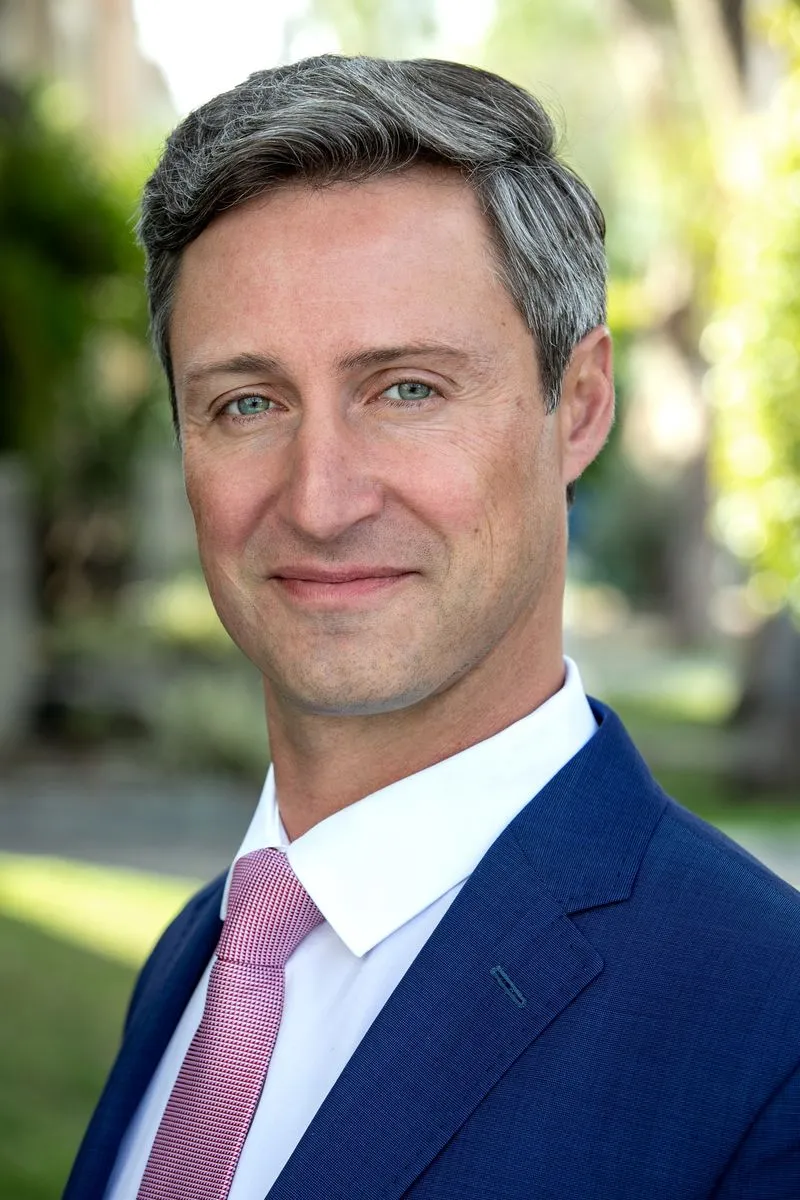
Trevor Damyan is a commercial mortgage broker at Commercial Lending Solutions with a background in structured finance at CBRE and Marcus and Millichap Capital Corporation. He specializes in bridge loans, construction financing, SBA programs, DSCR loans, and complex capital structures for investors and developers across all 50 states.
View full profile →