Industrial investment in the South Bend metro is best understood in the context of the broader Elkhart County manufacturing ecosystem, which produces recreational vehicles, musical instruments, manufactured housing, and precision components at a scale that creates structural demand for functional warehouse, fabrication, and distribution space along the US-20 corridor and the Indiana Toll Road. Class A industrial in Mishawaka and along the toll road commands cap rates in the 6.00% to 6.50% range for long-term leased product with creditworthy tenants, while value-add and multi-tenant flex trades in the 7.00% to 8.00% range and attracts regional private buyers comfortable managing near-term rollover. LaPorte County, anchored by the town of LaPorte and proximity to I-94, represents an emerging industrial submarket for Chicago-adjacent distribution requirements where land costs are a fraction of northwest Indiana alternatives.
Industrial Market Overview: South Bend 2026
The South Bend industrial market in 2026 reflects the metro's broader economic momentum, driven by advanced manufacturing, higher education, healthcare, logistics, financial services. Key metrics for industrial investors:
- Industrial Vacancy: 4.9%
- Industrial Cap Rates: 6.00%-7.00%
- Metro Rent Growth: 2.8% year-over-year
- Job Growth: 1.4%
- Population Growth: 0.3%
- Median Asking Rent: $895
Industrial Subtypes in South Bend
The South Bend industrial market encompasses a range of property subtypes, each with distinct risk-return profiles and financing requirements:
- Distribution & Logistics Centers
- Cold Storage & Food Processing
- Manufacturing & Production
- Flex / R&D Space
- Truck Terminals & Cross-Dock
- Data Centers
- Self-Storage
- Industrial Showrooms
Each subtype has different lender appetite, underwriting criteria, and optimal financing structures. Understanding which subtypes perform best in South Bend's specific market conditions is critical for investment success.
Key Investment Metrics
Industrial investors evaluating South Bend should focus on these key performance indicators:
- Cap Rate Spread: South Bend industrial cap rates at 6.00%-7.00% compare favorably to national averages, reflecting attractive yields for investors seeking current cash flow
- Rent Growth Trajectory: 2.8% annual rent growth supports both value-add and core investment strategies
- Supply Pipeline: New industrial construction activity should be evaluated relative to the market's absorption capacity
- Tenant Quality: The South Bend metro's major employment sectors (advanced manufacturing, higher education, healthcare, logistics, financial services) drive industrial tenant demand and creditworthiness
Financing Options for Industrial in South Bend
Industrial properties in South Bend can be financed through multiple capital sources, each with distinct advantages:
- Bank Permanent Loans
- Life Insurance Company Loans
- CMBS
- Bridge Loans
- Construction Loans
- SBA 504 (Owner-Occupied)
The optimal financing structure depends on your business plan (core hold, value-add, or development), the property's current condition and occupancy, and your desired leverage and hold period. In the South Bend market, lenders are most competitive for well-located assets with strong fundamentals and experienced sponsors.
Financing a industrial deal in South Bend? This guide covers the investment landscape. For current terms, capital sources, and a free quote, go to our Industrial Financing in South Bend, IN page or call (310) 708-0690.
Top Submarkets for Industrial Investment
The South Bend-Mishawaka metro features several distinct submarkets for industrial investment, each with unique characteristics:
- Downtown South Bend: offering distinct opportunities within the broader South Bend industrial market
- Mishawaka: offering distinct opportunities within the broader South Bend industrial market
- Granger: offering distinct opportunities within the broader South Bend industrial market
- Elkhart: offering distinct opportunities within the broader South Bend industrial market
- Goshen: offering distinct opportunities within the broader South Bend industrial market
- Warsaw: offering distinct opportunities within the broader South Bend industrial market
- Nappanee: offering distinct opportunities within the broader South Bend industrial market
- Buchanan MI: offering distinct opportunities within the broader South Bend industrial market
- Benton Harbor: offering distinct opportunities within the broader South Bend industrial market
- St. Joseph MI: offering distinct opportunities within the broader South Bend industrial market
- Laporte: offering distinct opportunities within the broader South Bend industrial market
- Plymouth IN: offering distinct opportunities within the broader South Bend industrial market
The most active investment corridors for industrial in South Bend include Downtown South Bend Smart District, Mishawaka US-20 corridor, Granger residential and retail, Elkhart RV and industrial corridor. Submarket selection significantly impacts both returns and financing terms, as lenders evaluate location-specific metrics in their underwriting.
Investment Thesis: Industrial in South Bend
The investment case for industrial in South Bend rests on several structural factors:
- Economic Fundamentals: 1.4% job growth and 0.3% population growth create durable demand
- Market Pricing: Cap rates at 6.00%-7.00% offer attractive entry points relative to coastal gateway markets
- Financing Environment: The South Bend market's depth and lender familiarity support competitive borrowing costs
- Growth Potential: 2.8% rent growth supports improving cash flows over the hold period
South Bend anchors a northern Indiana corridor whose economic identity is shaped by three distinct forces: University of Notre Dame's research and healthcare enterprise, a dense concentration of recreational vehicle and specialty vehicle manufacturing across the Elkhart County corridor, and a medical sector centered on Beacon Health System and its affiliates. Notre Dame's roughly 13,000 students and affiliated research programs generate sustained multifamily demand in the neighborhoods immediately surrounding campus and in downtown South Bend, where adaptive reuse of former Studebaker manufacturing buildings has produced mixed-use and creative office product that competes with purpose-built suburban alternatives. Elkhart, sitting at the eastern edge of this metro, is the self-described RV capital of the world, with Thor Industries, Winnebago operations, and hundreds of parts suppliers driving industrial absorption in shallow-bay and manufacturing configurations that rarely show meaningful vacancy. Warsaw, to the south, hosts a globally disproportionate share of orthopedic device manufacturers including Zimmer Biomet and DePuy Synthes operations, creating concentrated medical office and R&D demand in a market that most regional capital sources underwrite as generic rural Indiana. Retail fundamentals diverge sharply between Granger and Mishawaka, where Erskine Village and University Park Mall trade areas remain active, and downtown South Bend, where street-level retail still depends heavily on event traffic tied to Notre Dame football weekends and the broader revitalization timeline. Supply constraints in multifamily are less about zoning density than about the modest rental rate ceiling that limits merchant developer returns, making renovation of existing workforce housing stock the more common execution for regional operators.
CLS CRE: Industrial Financing in South Bend
CLS CRE specializes in industrial financing throughout the South Bend-Mishawaka metropolitan area. With access to 1,000+ lenders, we match your specific industrial investment with the right capital source at the most competitive terms available.
Related resources:
- Industrial Financing: National Overview
- Industrial Financing in South Bend: Rates & Terms
- Commercial Real Estate Loans in South Bend
- Bridge Loans in South Bend
- Permanent Loans in South Bend
- Construction Loans in South Bend
- South Bend Commercial Real Estate Market Report 2026
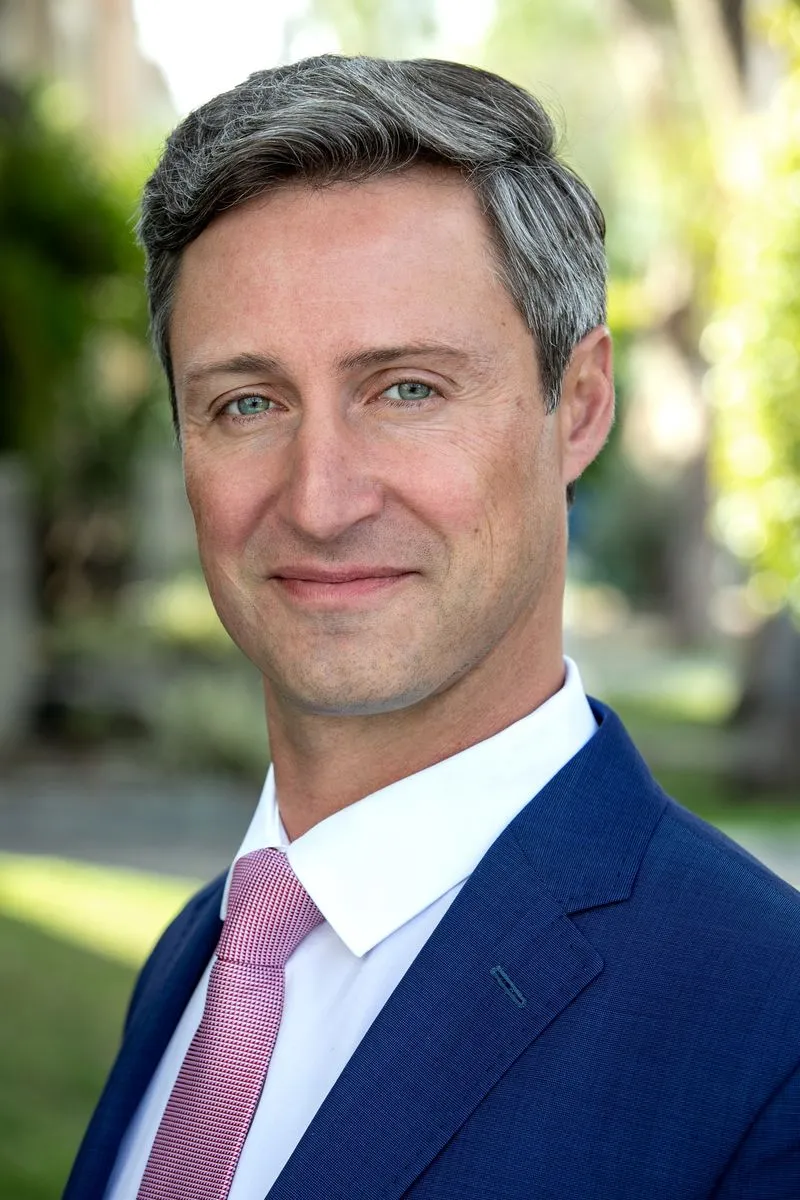
Trevor Damyan is a commercial mortgage broker at Commercial Lending Solutions with a background in structured finance at CBRE and Marcus and Millichap Capital Corporation. He specializes in bridge loans, construction financing, SBA programs, DSCR loans, and complex capital structures for investors and developers across all 50 states.
View full profile →