Santa Barbara's mixed-use investment is concentrated along upper and lower State Street and in the Funk Zone arts and food district near the waterfront. The Funk Zone's adaptive reuse of historic industrial buildings for wine tasting rooms, breweries, restaurants, and retail has become a model for California coastal mixed-use revival. State Street's ongoing commercial redevelopment is transitioning some retail to residential and hotel uses.
Mixed-Use Market Overview: Santa Barbara 2026
The Santa Barbara mixed-use market in 2026 reflects the metro's broader economic momentum, driven by UC Santa Barbara, Cottage Health, Sansum Clinic, County of Santa Barbara, Channel Islands NPS, Procore Technologies, AppFolio, Deckers Brands (UGG, HOKA), General Atomics, Lockheed Martin Space. Key metrics for mixed-use investors:
- Mixed-Use Vacancy: 4.5%
- Mixed-Use Cap Rates: 4.75%-6.00%
- Metro Rent Growth: 4.8% year-over-year
- Job Growth: 1.8%
- Population Growth: 0.4%
- Median Asking Rent: $3,200
Mixed-Use Subtypes in Santa Barbara
The Santa Barbara mixed-use market encompasses a range of property subtypes, each with distinct risk-return profiles and financing requirements:
- Retail + Residential
- Office + Residential
- Live-Work Spaces
- Transit-Oriented Development
- Land & Development Sites
- Adaptive Reuse & Conversion
- Ground-Floor Commercial + Apartments
- Mixed-Use Portfolios
Each subtype has different lender appetite, underwriting criteria, and optimal financing structures. Understanding which subtypes perform best in Santa Barbara's specific market conditions is critical for investment success.
Key Investment Metrics
Mixed-Use investors evaluating Santa Barbara should focus on these key performance indicators:
- Cap Rate Spread: Santa Barbara mixed-use cap rates at 4.75%-6.00% compare favorably to national averages, reflecting the market's premium fundamentals and institutional demand
- Rent Growth Trajectory: 4.8% annual rent growth supports both value-add and core investment strategies
- Supply Pipeline: New mixed-use construction activity should be evaluated relative to the market's absorption capacity
- Tenant Quality: The Santa Barbara metro's major employment sectors (UC Santa Barbara, Cottage Health, Sansum Clinic, County of Santa Barbara, Channel Islands NPS, Procore Technologies, AppFolio, Deckers Brands (UGG, HOKA), General Atomics, Lockheed Martin Space) drive mixed-use tenant demand and creditworthiness
Financing Options for Mixed-Use in Santa Barbara
Mixed-Use properties in Santa Barbara can be financed through multiple capital sources, each with distinct advantages:
- Bank Permanent Loans
- Bridge Loans
- Construction Loans
- CMBS
- Agency (If 80%+ Residential)
- Mezzanine & Preferred Equity
The optimal financing structure depends on your business plan (core hold, value-add, or development), the property's current condition and occupancy, and your desired leverage and hold period. In the Santa Barbara market, lenders are most competitive for well-located assets with strong fundamentals and experienced sponsors.
Financing a mixed-use deal in Santa Barbara? This guide covers the investment landscape. For current terms, capital sources, and a free quote, go to our Mixed-Use Financing in Santa Barbara, CA page or call (310) 708-0690.
Top Submarkets for Mixed-Use Investment
The Santa Barbara-Santa Maria metro features several distinct submarkets for mixed-use investment, each with unique characteristics:
- Downtown Santa Barbara: offering distinct opportunities within the broader Santa Barbara mixed-use market
- Goleta: offering distinct opportunities within the broader Santa Barbara mixed-use market
- Carpinteria: offering distinct opportunities within the broader Santa Barbara mixed-use market
- Montecito: offering distinct opportunities within the broader Santa Barbara mixed-use market
- Santa Ynez: offering distinct opportunities within the broader Santa Barbara mixed-use market
- Solvang: offering distinct opportunities within the broader Santa Barbara mixed-use market
- Buellton: offering distinct opportunities within the broader Santa Barbara mixed-use market
- Santa Maria: offering distinct opportunities within the broader Santa Barbara mixed-use market
- Lompoc: offering distinct opportunities within the broader Santa Barbara mixed-use market
- Orcutt: offering distinct opportunities within the broader Santa Barbara mixed-use market
- Nipomo: offering distinct opportunities within the broader Santa Barbara mixed-use market
- Pismo Beach: offering distinct opportunities within the broader Santa Barbara mixed-use market
The most active investment corridors for mixed-use in Santa Barbara include Goleta, Montecito, Carpinteria, Santa Barbara downtown, Upper State Street, Calle Real corridor, Fairview Avenue, Santa Ynez Valley. Submarket selection significantly impacts both returns and financing terms, as lenders evaluate location-specific metrics in their underwriting.
Investment Thesis: Mixed-Use in Santa Barbara
The investment case for mixed-use in Santa Barbara rests on several structural factors:
- Economic Fundamentals: 1.8% job growth and 0.4% population growth create durable demand
- Market Pricing: Cap rates at 4.75%-6.00% offer institutional-quality assets at competitive yields
- Financing Environment: The Santa Barbara market's depth and lender familiarity support competitive borrowing costs
- Growth Potential: 4.8% rent growth supports improving cash flows over the hold period
Santa Barbara's commercial real estate market is anchored by three distinct economic pillars: a high-concentration life sciences and technology cluster in Goleta centered on UC Santa Barbara and its affiliated research spinouts, a luxury tourism and hospitality economy stretching from Montecito through Downtown Santa Barbara, and an agricultural corridor in the Santa Maria and Santa Ynez valleys that underpins cold-storage industrial and wine-country hospitality demand. UCSB, a leading research university with strong materials science, photonics, and biotechnology programs, has produced a persistent pipeline of venture-backed companies that generate demand for creative and lab-enabled office product in Goleta, where vacancy rates have historically tracked well below coastal California norms. On the hospitality side, Montecito draws ultra-high-net-worth ownership that insulates retail and mixed-use assets along Coast Village Road from the cyclical softness that typically hits resort markets during downturns, making income underwriting there both more stable and harder to stress-test on rent growth assumptions. Industrial supply throughout the metro is severely constrained by geography, with the Santa Ynez Mountains to the north and the Pacific to the south compressing developable land, which has kept logistics and cold-chain facilities in Santa Maria and Orcutt effectively full even as statewide industrial absorption has slowed. Multifamily fundamentals are among the tightest in California, driven by Coastal Commission permitting friction and a local entitlement process that routinely extends timelines past four years, meaning existing stabilized apartment assets trade at cap rates that price in almost no near-term competitive supply risk.
CLS CRE: Mixed-Use Financing in Santa Barbara
CLS CRE specializes in mixed-use financing throughout the Santa Barbara-Santa Maria metropolitan area. With access to 1,000+ lenders, we match your specific mixed-use investment with the right capital source at the most competitive terms available.
Related resources:
- Mixed-Use Financing: National Overview
- Mixed-Use Financing in Santa Barbara: Rates & Terms
- Commercial Real Estate Loans in Santa Barbara
- Bridge Loans in Santa Barbara
- Permanent Loans in Santa Barbara
- Construction Loans in Santa Barbara
- Santa Barbara Commercial Real Estate Market Report 2026
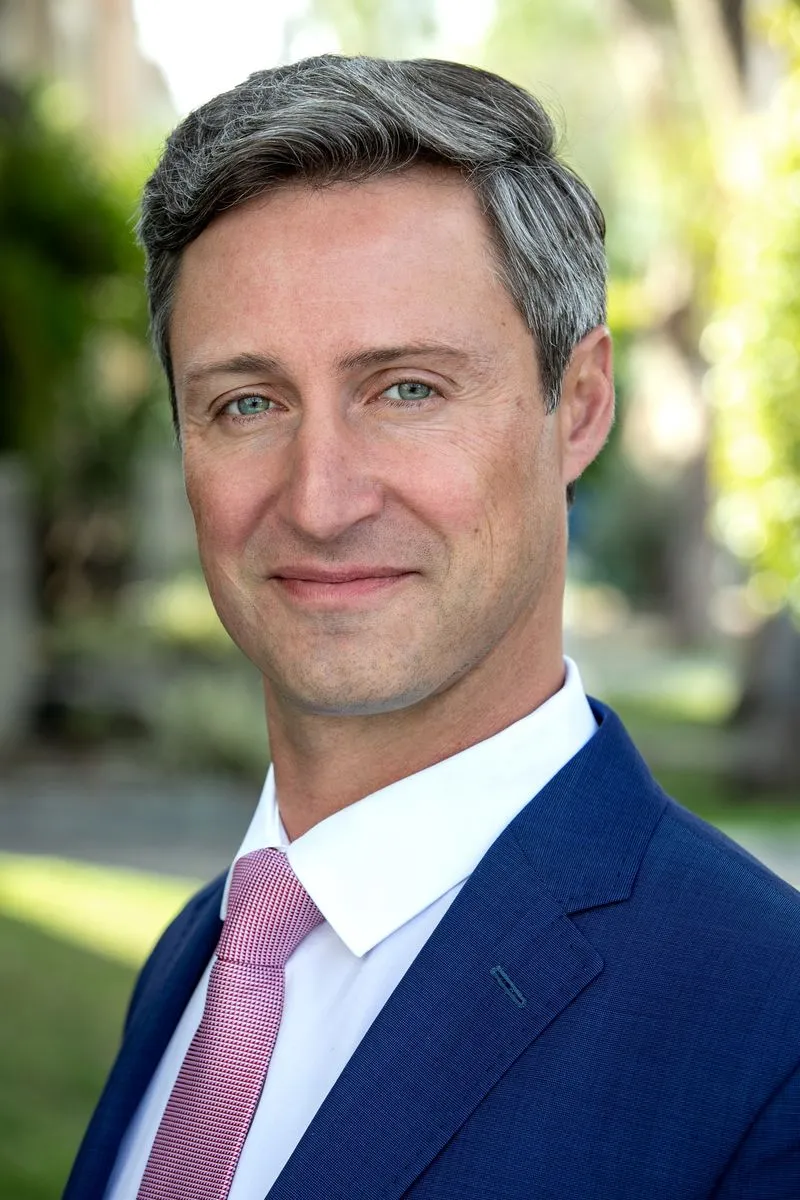
Trevor Damyan is a commercial mortgage broker at Commercial Lending Solutions with a background in structured finance at CBRE and Marcus and Millichap Capital Corporation. He specializes in bridge loans, construction financing, SBA programs, DSCR loans, and complex capital structures for investors and developers across all 50 states.
View full profile →